 |
|
|
PSOPHOCARPUS TETRAGONOLOBUS - WINGED BEAN.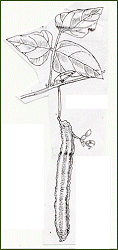 Common name
Winged bean, goa bean, four angled bean, kacang botol, pois ailé, fava de cavalo, frijol alado, princess bean, shikaku mame, kecipir, kacang botor, kacang kelisa, thua phuu. Family Leguminaceae/Fababceae (Bean family). Overview Winged bean, originally from Indonesia is a high climbing tropical vine with trifoliate leaves while the large flowers are pale blue. The pod, 6 - 9" long, has four wings with frilly edges running lengthwise. When fully ripen, the pods turn brown and split open to release the seeds, making a popping sound. These are round and green when mature, while the large flowers are pale blue. The fruits are used as a vegetable but the other parts (leaves, flowers and tuberous roots) are also edible. The young shoots and leaves may be eaten raw or cooked as vegetables. The flowers are used to color rice and pastries. In Surinam, Tempeh and tofu are made from winged bean seeds. Hardiness USDA zone 8 - 11. Propagation Seeds. Culture A typical tropical plant; sensitive to frost, will not flower if daylight length is more than 12 hours. Full sun, well drained soil; tolerates some drought. It can also be grown as an annual. The seeds should be scratched or soaked in warm water for a short time before planting. Sow only after danger of frost has past. |