 |
|
|
PASSIFLORA EDULIS var. Flavicarpa. - MARACUJA.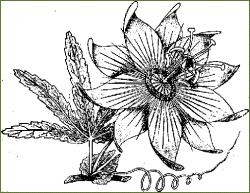 Common name
Yellow passion fruit, maracuja, yellow granadilla, pomme liane jaune, clock plant (tokeisõ), clock-flower. Family Passifloraceae.(Passiflora family) Overview The Passion fruit plant is an indigenous tropical and semi-tropical climber, with a hard woody stem that climbs by using it's tendrils. There are over 300 species of Passionflower; the Amazon region produces the most of these. Depending on the species, the leaves vary from dark green, small, entire to five lobed, fine toothed. Maracuja has strikingly beautiful, large white flowers with purple centers; those contributed to the name Passionflower as the outlook can be associated with the Crucifixion of Christ. The form and very often the color of the edible fruit, is also set by the species, elongated to small heart-shaped, greenish-white to purple. In Suriname the Passiflora edulis var. flavicarpa is grown commercially for the fruit juice, which is one of the most delicious of all in the tropics, and now known all over the world! Yellow passionflower fruit is almost round with a diameter of 2½ - 3½". Surinam growers plant two forms: purple and yellow. The yellow passionflower fruit is less fragrant and somewhat more acidic than the purple passionflower variety. It is also less adaptive to cold and needs a tropical temperature to fruit. The small black seeds are embedded in the juicy pulp. Constituents Harman indole alkaloids (harmine, harmaline, and harmalol), phenols, glycosyl flavonoids (flavone di-C-glycosides shaftoside, isoshaftoside, isovitexin, iso-orientin, vicenin, lucenin, saponarin, and passiflorine). Free flavonoids include apigenin, luteolin, quercetin, and kamferol and cyanogenic compounds. Pharmacology Passiflora species have sedative and tranquilizing effects; they have a positive effect on tenseness, restlessness and irritability. Extract of the leaves may have a significant antitussive activity on cough. Recent studies shows that the leaves also have anticonvulsant effects. Smoking dried leaves, have reportedly been giving a mild marijuana type high. There is a gradually loss of the taste for much nicotine. For some reason, passionflower leaves reduces nicotine cravings drastically. Suriname's Traditional Medicine Traditionally used to treat anxiety, attention- deficit, hyperactivity disorder, hypertension and seizure. The leaves of passionflower are used to settle edgy nerves, also for colic, diarrhea, dysentery, and insomnia. Visit also our TINCTURE page! Hardiness USDA zone 9 A - 11. Propagation Seeds. Culture Full sun / light shade, fertilize well, drained sandy soil with a Ph of 6.5 - 7.5. Water regularly; it can also successfully be used as a container plant. Plant in a frost-free spot, although the roots are hardy to 26° F. |
)
)
)
)
)
)
)
)
|
|
For the right freight rate, shipping charges, conditions and delivery service, please visit our Webstore page! |